

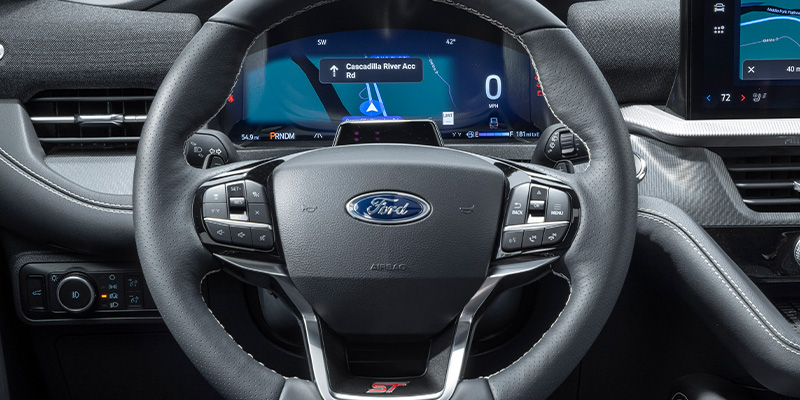
Traditionally, the engine design playbook requires an engine to increase size to deliver more power. A larger engine weighs more, and the heavier the vehicle, the more fuel is required to move it. The Ford EcoBoost engine changes this game plan by delivering increased power and fuel efficiency in a smaller engine. As your Ford dealer, we want to tell you more about how this works.
How it Works
This technology uses three complementary processes: turbocharging, direct fuel injection, and variable cam timing. We’re going to look at each of them and see what they deliver.
Turbocharging
Air and fuel are essential for combustion, and while it may seem strange, the perfect combustion ratio is 14:1 air-to-fuel. This is because fuel requires a large amount of oxygen to burn correctly. Air enters a standard engine through the air filter behind the radiator grille. Since air is so important for combustion, the more air enters the engine, the faster combustion occurs.
Turbocharging uses the pressurized exhaust gases forced out through the tailpipe to spin a turbine. The turbine spins at high speed, pushing more oxygen into the engine. This increases engine power, allowing faster starts without increasing engine size or weight. The turbine works most efficiently when you’re traveling at high speed, while at lower speeds, the engine doesn’t need additional power, and you use less fuel.
Direct Fuel Injection
In a standard engine, fuel and air mix in the intake manifold. Once sensors determine the mixture is correct, it’s drawn into the engine cylinders through the intake valves. The intake valves close, and the piston inside a cylinder rises at speed to compress the mixture. The compressed mixture is forced into the combustion chamber at the top of the cylinder and ignited by the spark plug to produce combustion.
Direct injection involves spraying fuel directly into the combustion chambers rather than the intake manifold. This saves fuel and enables a faster and more efficient burn, increasing the power generated by combustion.
Variable Camshaft Timing
Timing is everything in combustion. The timing belt links the camshaft at the top of your engine to the crankshaft at the bottom of the engine. The belt moves at a set speed to synchronize the opening and closing of the intake and exhaust valves on the cylinders to ensure efficient combustion. Correct timing is essential, as a vent opening or closing at the wrong time can cause engine damage.
Variable Camshaft Timing manages this process more efficiently, so the valves open and close at different speeds depending on engine load. This reduces wasted fuel and improves engine torque, giving you more power when you need it.
If you’d like to know more about how these engines improve your driving experience, contact us today at Interstate Ford in Dacono, CO.
Connect with us


Recent Blog Entries
- Ford Maverick Towing Capacity: What You Need to Know Before You Hitch Up
- Ford Mustang Mach-E Interior: A Closer Look at What’s Inside
- Are Ford Explorers Reliable? A Closer Look at One of Ford’s Most Popular SUVs
- Ford F-350 Towing Capacity: Built for Serious Hauling
- 2026 Ford Maverick Trim Comparison: XL vs. XLT — Which One Is Right for You?