
Blog / Dacono Ford Dealer

5 Reasons to Test Drive the 2025 Ford Mustang

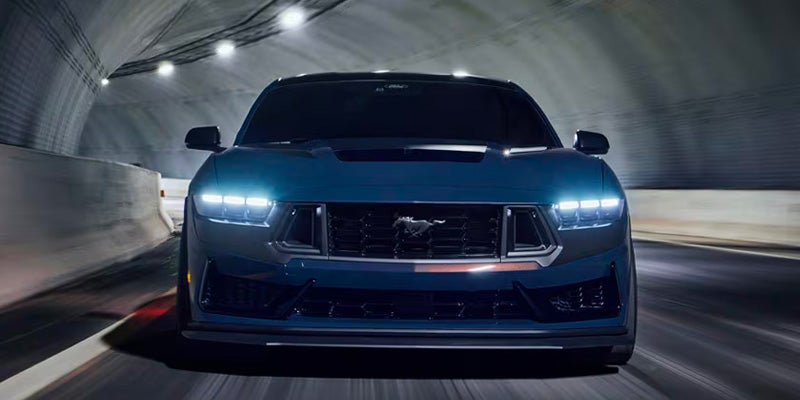
a 2025 Ford Mustang driving through a tunnel road


The 2025 Ford Mustang is the latest generation of iconic American muscle, and it's a coupe that accepts to limitations. Here are five reasons to take one out for a spin.

1. American Muscle

The 2025 Mustang offers a lineup of power plants to make any fan of high-octane fun drool. EcoBoost models are driven by a turbocharged 2.3L EcoBoost engine featuring Modular Power Cycle engine architecture, allowing it to put out an impressive 315 horsepower and 350 lb-ft of torque for heart-pounding launches and incredible performance. A standard 10-speed automatic transmission

GT coupes see an upgrade to a full five liters of fury, featuring a Gen-4 Coyote 5.0L V8 that delivers 486 horsepower and 418 lb-ft of torque for even more mind-boggling performance. Dark Horse variants use a modified version of the same engine that delivers a full 500 horsepower for the ultimate thrill. Both automatic transmissions and advanced 6MTs with rev-matching are available for those who prefer manual shifting.

2. A Growing Trophy Case

The 2025 Mustang just keeps racking up awards. The NHTSA gave the Mustang a 5-star safety rating, while J.D. Power gave it Highest Initial Quality for Sporty Cars in 2025. MotorTrend even crowned it the #1 Premium Performance Coupe. No wonder the Mustang is America's best-selling sports car.

3. Drift Brake and Line Lock

Take the 2025 Mustang out to the track with the available class-first Drift Brake, and you'll have plenty of fun throwing it into amazing movie-like drifts. The system locks the rear brakes while releasing the front brakes, allowing incredible slides. Standard Electronic Line Lock locks only the front brakes, letting the back wheels spin, letting drivers do incredible burnouts or simply warm up the back tires for incredible grip.

4. Advanced Cockpit Performance

Check out the interior of the 2025 Mustang, and you'll be greeted with a driver's paradise. The massive 12.4" digital instrument cluster is fully customizable, and the expansive 13.2" infotainment display features Sync 4 technology for easy interactivity with your phone via standard wireless Android Auto and Apple CarPlay compatibility. The system also leverages over-the-air updates to keep performing at its best.

Standard Track Apps lets the driver see stats like longitudinal and lateral G-forces, enables automatic countdown starts, and more. The graphics are also driven by the Unreal Engine and inspired by your favorite racing games for incredible, customized displays.

5. Advanced Assistance

The 2025 Mustang integrates the Ford Co-Pilot360 suite of advanced driver assistive features for enhanced safety on every drive. Standard lane-keeping assistance, blind-spot assistance, and pre-collision assistance with automatic emergency braking help make sure every journey ends with a smile.

It's time to experience pony power for yourself. Test drive the 2025 Mustang today at Interstate Ford in Dacono, CO.
Posted in:

Related Posts

Ford F-150

Ford Vehicles for Small Businesses: Put the Job Before the Truck

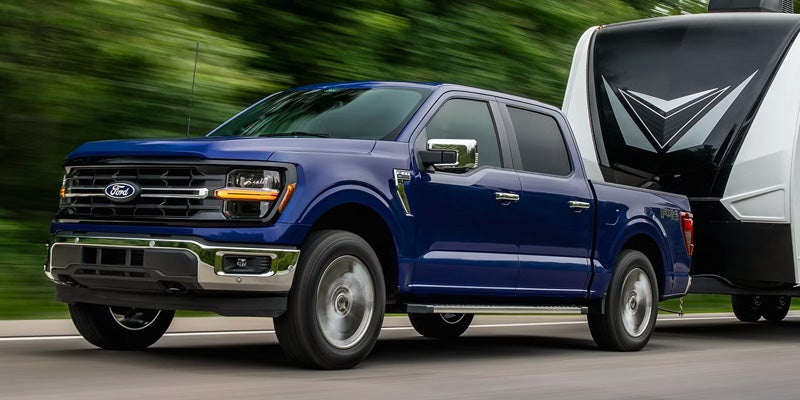
There is no such thing as a single ideal work vehicle. A landscaper pulling equipment has very different requirements from a company transporting 7 employees, and neither needs the same truck as a contractor towing 30,000 lbs. That’s what makes Ford’s 2026 lineup useful. The F-150 ®, Super Duty® trucks, Explorer®, and Expedition® cover jobs ranging from everyday business transportation to serious heavy-duty towing. For small businesses around Frederick, Colorado, the smart place to start is with the workload. F-150® Is the Everyday Workhorse Calling the 2026 F-150® light-duty can be misleading when maximum available towing reaches 13,500 lbs. and payload reaches 2,440 lbs. when properly configured. There are 6 available engines. The 2.7L EcoBoost® V6 produces 325 hp and 400 lbs. ft. of torque, while the available 3.5L EcoBoost® V6 raises those figures to 400 hp and 500 lbs. ft. of torque. The 5.0L Ti-VCT V8 makes 400 hp and 410 lbs. ft. of torque. There’s also the available 3.5L PowerBoost® Full Hybrid V6, producing 430 hp and 570 lbs. ft. of torque. For contractors carrying tools, towing equipment, or moving materials between jobsites, those numbers may be enough to avoid stepping into a heavier truck. Super Duty® Is a Completely Different Tool Once trailer weights move beyond F-150® territory, Ford’s Super Duty® lineup takes over. The F-250®, F-350®, and F-450® offer 4 engines. Gas choices include a 6.8L V8 producing 405 hp and 445 lbs. ft. of torque and a 7.3L V8 with 430 hp and 485 lbs. ft. of torque. Then there are the diesels. The 6.7L Power Stroke® V8 Turbo Diesel produces 475 hp and 1,050 lbs. ft. of torque. Its High Output counterpart reaches 500 hp and an enormous 1,200 lbs. ft. of torque. Properly equipped Super Duty® models can tow up to 40,000 lbs. with a gooseneck trailer. At that point, you’re not buying extra capability for bragging rights. You’re buying the truck because the equipment behind it demands it. Explorer® Works When the Cargo Has Legs Plenty of businesses need seats more than pickup beds. The 2026 Explorer® accommodates up to 7 passengers and provides as much as 85.8 cu. ft. of cargo space behind the first row. Its standard 2.3L EcoBoost® produces 300 hp and 310 lbs. ft. of torque, while an available 3.0L EcoBoost® V6 produces 400 hp and 415 lbs. ft. of torque. Maximum towing capacity reaches 5,000 lbs. That combination can make considerably more sense for businesses transporting employees, clients, equipment, or some combination of all three. Expedition® Adds Space and Towing Capacity When 7 seats aren’t enough, the 2026 Expedition® seats up to 8 passengers and can tow as much as 9,600 lbs. when properly equipped. Its 3.5L EcoBoost® V6 produces 400 hp and 480 lbs. ft. of torque. The available High Output version increases output to 440 hp and 510 lbs. ft. of torque. Expedition® MAX provides additional space behind the third row, making it particularly useful when the job involves moving passengers and their equipment at the same time. Business Technology Should Save Tome, Too The vehicle itself is only part of the operating equation. Available Ford Pro™ Telematics can help compatible fleets track information including vehicle location, fuel consumption, maintenance needs, and driver behavior. Available Pro Power Onboard can turn certain F-150® configurations into mobile power sources for equipment and tools. Ford Mobile Service and Pickup & Delivery can also reduce the disruption associated with routine maintenance, depending on availability and eligible services. For a small business, keeping a vehicle working can be every bit as important as what it can tow. Buy for the Work You Really Do The F-150® covers substantial towing and payload requirements without moving into heavy-duty territory. Super Duty® is the answer when trailers and equipment become considerably heavier. Explorer® and Expedition® shift the equation toward passenger and enclosed cargo capacity. Visit Interstate Ford in Frederick to compare new Ford vehicles for small business, discuss commercial configurations and available Ford Pro™ services, and determine how much vehicle your operation requires. Once you’ve narrowed the choices, schedule a test drive online and see which Ford work vehicle fits the job.

Transit Cargo Van

2026 Ford Transit® Cargo Van Configurations: Build It for the Work

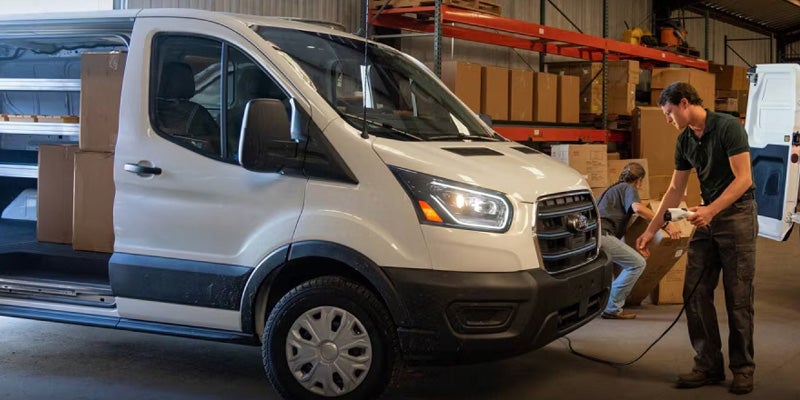
A cargo van is a tool. And like any tool, buying the biggest one because it can hold the most stuff isn’t necessarily a smart move. A plumber working out of parking garages has different problems than a delivery company moving pallets. An HVAC crew needs room for shelving and equipment. A mobile repair business might need enough height to stand up and work inside. That’s why the 2026 Ford Transit ® Cargo Van comes in so many configurations. Roof height, wheelbase, body length, drivetrain, and engine all change what the van can do. For businesses around Frederick, Colorado, the job should determine the van. Roof Height Is About More Than Cargo Volume The Transit® Cargo Van comes with low, medium, and high roof configurations. A low roof keeps the van’s overall height manageable when garages, loading docks, and other clearance restrictions are part of the workday. The medium roof gives crews additional vertical room without committing to the tallest Transit® body. Then there’s the high roof. For plumbers, electricians, HVAC technicians, and mobile-service crews, being able to organize equipment vertically and move around inside the cargo area can change how the van functions as a workspace. In its largest configuration, maximum cargo volume reaches 487.3 cu. ft. behind the front seats. That’s enough space to think beyond piles of equipment and start building an organized storage system around the work. Wheelbase Changes Where the Van Fits The regular Transit® wheelbase measures 129.9 inches. Long-wheelbase models stretch to 147.6 inches, and that longer wheelbase can also be paired with an extended body. More length means more room, naturally, but it also means more van to maneuver. A regular-wheelbase Transit® may be the better tool for service calls, crowded jobsites, and businesses spending considerable time in tighter spaces. Long and extended configurations trade some of that maneuverability for additional floor length. Rear access changes with configuration, too. Available 50/50-hinged rear cargo doors can open 180 degrees or as far as 253 degrees, allowing them to swing alongside the body and stay out of the way while loading. There Are Two Ways to Get V6 Power The standard 3.5L PFDi V6 produces 275 hp and 260 lbs. ft. of torque. The available 3.5L EcoBoost® V6 increases output to 300 hp and, more importantly for a working van, 400 lbs. ft. of torque. Both use a 10-speed automatic transmission. RWD is standard, while AWD is available. For a Frederick business that keeps working through Colorado winters, that drivetrain choice deserves consideration alongside cargo dimensions and payload. Maximum payload reaches 5,103 lbs. when properly configured. Cutaway models can tow up to 6,900 lbs. when properly equipped. Exact ratings depend on body style, drivetrain, equipment, and configuration, so the number attached to the specific van matters. Start With What Goes Inside This is where ordering the right Transit® gets easier. A courier company moving high volumes of packages may want the long wheelbase, high roof, and maximum available cargo volume. A contractor carrying tools, bins, and shelving might get more use from a medium roof and a shorter body that’s easier to position at a crowded jobsite. A mobile repair operation could take the high-roof configuration and turn the cargo area into a proper working space with shelving, storage bins, and vocational upfits. The point isn’t to maximize every specification. It’s to avoid paying for size or capability the business doesn’t use. Fleet Technology Has a Job, Too Available Ford Pro™ technology can help businesses manage the vans after they’ve been put to work. Ford Pro™ Telematics can provide information on compatible fleet vehicles, while available Ford Co-Pilot360® driver-assistance features can support drivers during long days on the road. An available Ford Connectivity Package can also provide features including connected navigation, voice assistance, and Wi-Fi® hotspot capability, depending on configuration. Configure Your Transit® Around the Business The best Transit® Cargo Van isn’t automatically the one with 487.3 cu. ft. of space. Sometimes the right answer is a 129.9-inch wheelbase and low roof. Another business may need the 147.6-inch wheelbase, extended body, and high roof. Visit Interstate Ford in Frederick to compare 2026 Ford Transit® Cargo Van configurations, discuss commercial upfits and fleet requirements, and determine which dimensions fit the work. Once you’ve narrowed down the configuration, schedule a test drive online and see how the Transit® handles a working day.

Lease Vs Finance

Ford Lease vs. Finance: Why The Choice Matters for Frederick, CO Drivers

Whether you're eyeing a new F-150, Bronco, or Explorer, one of the first decisions you'll face is whether to lease or finance your new Ford. Both paths have real advantages depending on your situation, and understanding the difference can save you money and stress in the long run. For drivers in and around Frederick, Colorado—including those commuting toward Denver, Longmont, or Dacono—picking the right option comes down to how you plan to use your vehicle and what matters most to you financially. What It Means to Lease a Ford When you lease a Ford, you're essentially paying for the portion of the vehicle's value you use during the lease term. Monthly payments are often lower than financing because you're not paying off the full purchase price. Ford Credit Red Carpet Lease offers are available on popular models like the 2026 F-150, 2026 Bronco, and 2026 Explorer. These deals can include $0 down payment, $0 first month's payment, and a security deposit waiver, making them especially appealing if you prefer lower upfront costs. Leases typically run 36 months and include mileage limits—which works if you drive a predictable number of miles each year and like being in a new vehicle every few years. Leasing a Ford tends to work best for drivers who want low monthly costs and the ability to upgrade regularly. What It Means to Finance a Ford Financing means you're taking out a loan to purchase the vehicle outright. Your monthly payments go toward owning the car, and once the loan is paid off, the vehicle is yours with no further obligations. This is a strong fit for drivers who put a lot of miles on their vehicles or want to customize their Ford without restrictions. If you plan to keep your truck or SUV for several years, financing often provides greater long-term value. You also build equity in the vehicle over time, which can be applied toward your next purchase. Ford makes it easy to explore your financing options online. You can pre-qualify with zero credit impact and use the Build and Price tool to configure your ideal vehicle before you ever set foot in a dealership. Key Differences at a Glance The Ford lease vs. finance comparison really comes down to a few core factors. Leasing offers lower monthly payments, the latest technology, and minimal long-term commitment. Financing offers ownership, flexibility around mileage and modifications, and long-term savings once the vehicle is paid off. Mileage is one of the biggest considerations. Leases typically cap usage—for example, 31,500 miles over a 36-month term. If you regularly log long miles on Colorado highways between Denver, Dacono, and Longmont, financing may be the better call. You should also think about how often you like to switch vehicles. If you enjoy driving something new every 2 or 3 years, leasing fits that lifestyle well. If you prefer consistency and plan to keep your Ford for the long haul, buying tends to win out. How to Make the Right Call The answer to whether you should lease or buy a Ford depends entirely on your lifestyle and financial goals. There's no universally right answer, but there is a right answer for you. Think through your typical annual mileage, whether you want ownership equity, and how often you'd like to upgrade. Then consider current lease offers alongside financing rates to compare real monthly costs. Ford's online tools let you build your vehicle, estimate payments, and search available inventory—so you can walk in with a clear picture before making any decisions. Find Your Best Option at Interstate Ford When it comes to the Ford lease vs finance question, the right choice puts you in the driver's seat, literally and financially. Whether you're drawn to a low-payment lease or the long-term value of financing, Interstate Ford is here to walk you through every detail. Drivers throughout Frederick, Colorado, and the surrounding communities are encouraged to explore current offers and connect with the team to find the right fit.