
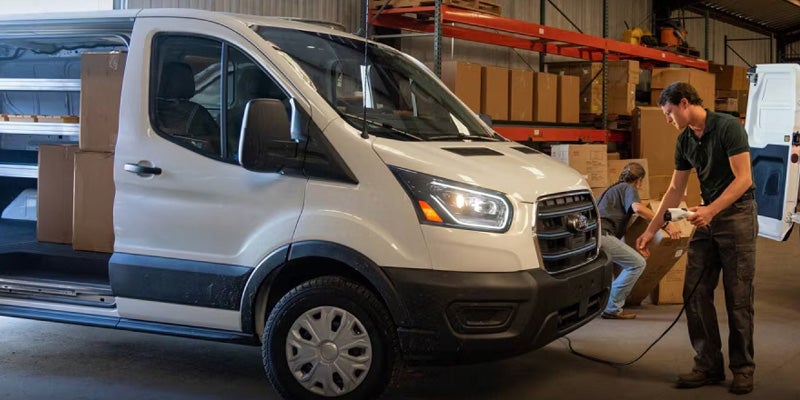
A cargo van is a tool. And like any tool, buying the biggest one because it can hold the most stuff isn’t necessarily a smart move. A plumber working out of parking garages has different problems than a delivery company moving pallets. An HVAC crew needs room for shelving and equipment. A mobile repair business might need enough height to stand up and work inside. That’s why the 2026 Ford Transit® Cargo Van comes in so many configurations. Roof height, wheelbase, body length, drivetrain, and engine all change what the van can do. For businesses around Frederick, Colorado, the job should determine the van.
Roof Height Is About More Than Cargo Volume
The Transit® Cargo Van comes with low, medium, and high roof configurations. A low roof keeps the van’s overall height manageable when garages, loading docks, and other clearance restrictions are part of the workday. The medium roof gives crews additional vertical room without committing to the tallest Transit® body. Then there’s the high roof. For plumbers, electricians, HVAC technicians, and mobile-service crews, being able to organize equipment vertically and move around inside the cargo area can change how the van functions as a workspace. In its largest configuration, maximum cargo volume reaches 487.3 cu. ft. behind the front seats. That’s enough space to think beyond piles of equipment and start building an organized storage system around the work.
Wheelbase Changes Where the Van Fits
The regular Transit® wheelbase measures 129.9 inches. Long-wheelbase models stretch to 147.6 inches, and that longer wheelbase can also be paired with an extended body. More length means more room, naturally, but it also means more van to maneuver. A regular-wheelbase Transit® may be the better tool for service calls, crowded jobsites, and businesses spending considerable time in tighter spaces. Long and extended configurations trade some of that maneuverability for additional floor length. Rear access changes with configuration, too. Available 50/50-hinged rear cargo doors can open 180 degrees or as far as 253 degrees, allowing them to swing alongside the body and stay out of the way while loading.
There Are Two Ways to Get V6 Power
The standard 3.5L PFDi V6 produces 275 hp and 260 lbs. ft. of torque. The available 3.5L EcoBoost® V6 increases output to 300 hp and, more importantly for a working van, 400 lbs. ft. of torque. Both use a 10-speed automatic transmission. RWD is standard, while AWD is available. For a Frederick business that keeps working through Colorado winters, that drivetrain choice deserves consideration alongside cargo dimensions and payload. Maximum payload reaches 5,103 lbs. when properly configured. Cutaway models can tow up to 6,900 lbs. when properly equipped. Exact ratings depend on body style, drivetrain, equipment, and configuration, so the number attached to the specific van matters.
Start With What Goes Inside
This is where ordering the right Transit® gets easier. A courier company moving high volumes of packages may want the long wheelbase, high roof, and maximum available cargo volume. A contractor carrying tools, bins, and shelving might get more use from a medium roof and a shorter body that’s easier to position at a crowded jobsite. A mobile repair operation could take the high-roof configuration and turn the cargo area into a proper working space with shelving, storage bins, and vocational upfits. The point isn’t to maximize every specification. It’s to avoid paying for size or capability the business doesn’t use.
Fleet Technology Has a Job, Too
Available Ford Pro™ technology can help businesses manage the vans after they’ve been put to work. Ford Pro™ Telematics can provide information on compatible fleet vehicles, while available Ford Co-Pilot360® driver-assistance features can support drivers during long days on the road. An available Ford Connectivity Package can also provide features including connected navigation, voice assistance, and Wi-Fi® hotspot capability, depending on configuration.
Configure Your Transit® Around the Business
The best Transit® Cargo Van isn’t automatically the one with 487.3 cu. ft. of space. Sometimes the right answer is a 129.9-inch wheelbase and low roof. Another business may need the 147.6-inch wheelbase, extended body, and high roof. Visit Interstate Ford in Frederick to compare 2026 Ford Transit® Cargo Van configurations, discuss commercial upfits and fleet requirements, and determine which dimensions fit the work. Once you’ve narrowed down the configuration, schedule a test drive online and see how the Transit® handles a working day.